Why Rent a Car in Heraklion?
Heraklion, the largest city and administrative capital of Crete, serves as the gateway to one of Greece's most diverse and historically rich islands. As the entry point for millions of visitors arriving through Heraklion International Airport "Nikos Kazantzakis" (HER), this vibrant city offers the perfect starting point for exploring Crete's archaeological treasures, pristine beaches, rugged mountains, and traditional villages.
Renting a car in Heraklion provides unparalleled freedom to discover Crete at your own pace. The island's extensive road network connects coastal resorts, mountain villages, ancient Minoan palaces, and hidden beaches that public transportation cannot efficiently reach. With a rental vehicle, you can visit the Palace of Knossos in the morning, swim at Matala Beach in the afternoon, and watch the sunset from a mountain taverna in the evening—all in a single day.
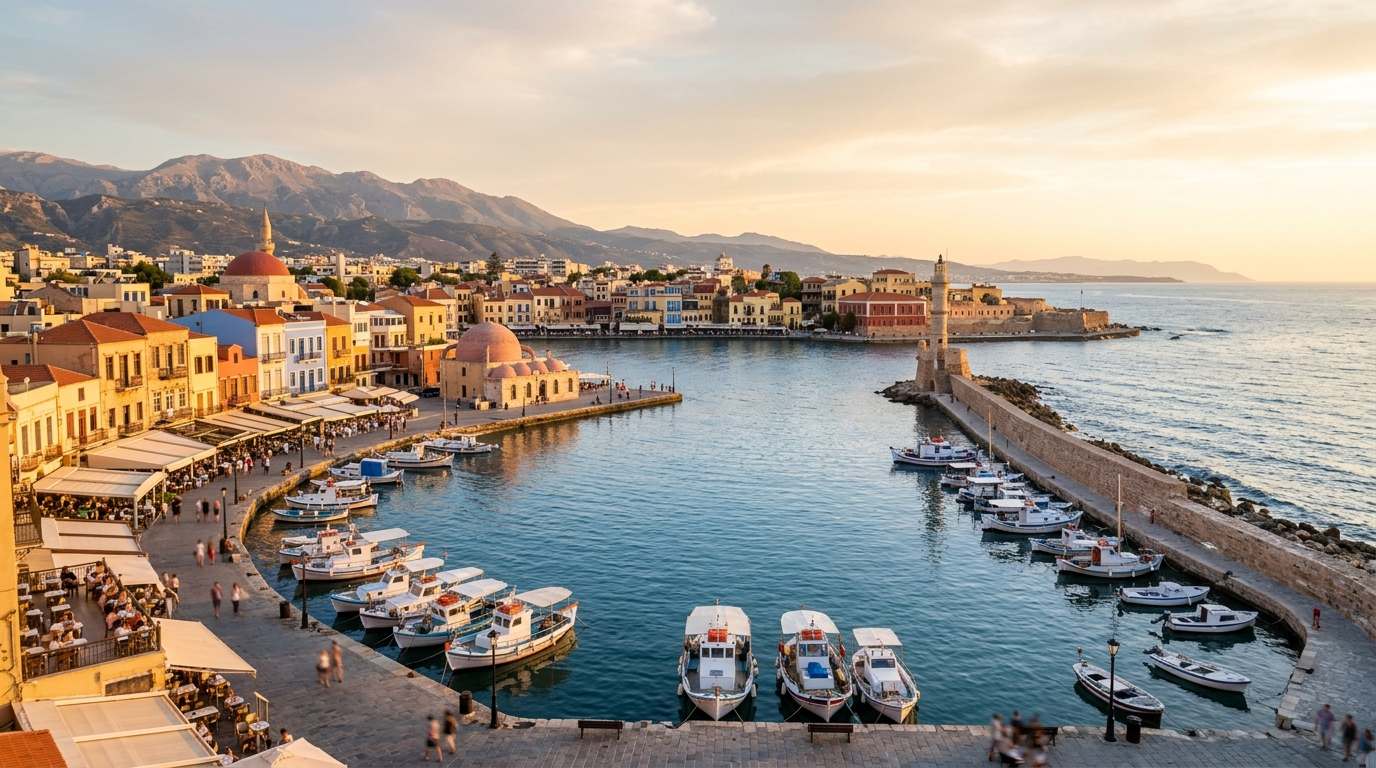
The strategic location of Heraklion makes it an ideal base for exploring central and eastern Crete. Within an hour's drive, you can reach the archaeological site of Phaistos, the beach resort of Hersonissos, the traditional villages of the Lasithi Plateau, or the charming coastal town of Agios Nikolaos. For longer excursions, the western city of Chania and its Venetian harbor lie approximately 2.5 hours away, while the southern coast's remote beaches and gorges offer adventurous day trips.
Benefits of Car Hire in Heraklion
- Airport convenience: Pick up your rental car immediately upon arrival at Heraklion Airport, eliminating the need for taxis or shuttle buses to reach your accommodation.
- Archaeological access: Drive directly to major Minoan sites including Knossos, Phaistos, Malia, and Gortyn, with parking facilities available at all major archaeological parks.
- Beach flexibility: Access dozens of beaches along Crete's northern and southern coasts, from organized resorts to secluded coves accessible only by car.
- Mountain exploration: Navigate Crete's mountainous interior, visiting traditional villages like Archanes, Zaros, and Anogia, where authentic Cretan culture thrives.
- Winery tours: Visit the growing number of wineries in the Heraklion region, including those in the Peza appellation, famous for indigenous grape varieties.
- Cost efficiency: Split rental costs among travel companions and save money compared to guided tours or multiple taxi rides across the island.
- Time optimization: Create your own itinerary without being constrained by bus schedules or tour group timing, maximizing your vacation experience.
- Family comfort: Travel with children and elderly family members in air-conditioned comfort, with the ability to make stops whenever needed.
Heraklion Car Rental Locations
Glocal Greece connects you with verified local car rental providers operating from multiple strategic locations throughout Heraklion. Our network ensures you can pick up and drop off your vehicle at the most convenient point for your travel plans.
Heraklion Airport Car Rental (HER)
Heraklion International Airport "Nikos Kazantzakis" is located approximately 5 kilometers east of the city center and serves as the primary arrival point for international visitors to Crete. The airport handles over 8 million passengers annually during the peak summer season, making it one of Greece's busiest airports.
Car rental desks at Heraklion Airport are conveniently located in the arrivals hall, allowing you to complete paperwork and collect your keys within minutes of landing. The rental car parking area is situated directly outside the terminal building, with clearly marked sections for different providers. This proximity eliminates the need for shuttle buses and allows you to begin your Cretan adventure immediately.
Airport car hire in Heraklion offers several advantages: 24-hour availability during summer months, immediate access to the island's road network, and the ability to avoid city traffic when traveling to eastern destinations like Agios Nikolaos or southern areas like Matala. The main highway to Heraklion city center and beyond is easily accessible from the airport exit.
Heraklion City Center Car Rental
For travelers already staying in Heraklion or arriving by ferry from Athens (Piraeus) or other Greek islands, city center rental locations offer convenient access without the need to travel to the airport. Multiple providers maintain offices along the coastal road near the Venetian Harbor and in the modern downtown area near Liberty Square (Plateia Eleftherias).
City center locations are ideal for visitors who spend their first days exploring Heraklion's urban attractions—including the Archaeological Museum, Koules Fortress, and historic market—before embarking on island-wide excursions. These offices typically operate during standard business hours, with some offering extended summer schedules to accommodate tourist demand.
Heraklion Port Car Rental
Heraklion's port area, located adjacent to the Old Venetian Harbor, serves ferry connections to Santorini, Athens, and other Cycladic islands. Several car rental providers operate near the port terminal, catering to visitors arriving by sea who wish to explore Crete by car before continuing their island-hopping journey.
Port-area rental offices are particularly popular with travelers on multi-island itineraries who want to maximize their time in Crete without the constraints of organized tours. The proximity to major coastal roads makes it easy to begin driving immediately after disembarking from ferry services.
Types of Rental Cars Available in Heraklion
The diverse terrain of Crete and varying travel needs of visitors require a comprehensive range of vehicle options. Heraklion's rental market offers everything from compact city cars to rugged SUVs capable of handling mountain roads and unpaved beach access paths.
Economy and Compact Cars
Small vehicles like the Fiat Panda, Hyundai i10, and Toyota Aygo are the most popular choices for budget-conscious travelers and couples. These cars offer excellent fuel efficiency (often exceeding 20 km per liter), easy parking in narrow village streets and crowded beach parking areas, and affordable rental rates. Economy cars are perfectly adequate for exploring Heraklion city, visiting major archaeological sites, and driving along paved coastal roads.
However, economy cars have limitations on Crete's mountainous terrain. Underpowered engines may struggle on steep mountain roads leading to villages like Anogia or when crossing the island via mountain passes. Limited luggage space can be challenging for travelers with multiple suitcases or planning beach days with extensive equipment.
Medium and Family Cars
Mid-size vehicles such as the Nissan Qashqai, Toyota Corolla, and Volkswagen Golf provide the optimal balance of comfort, space, and performance for most Crete visitors. These cars comfortably accommodate 4-5 passengers with luggage, offer sufficient power for mountain driving, and maintain reasonable fuel economy.
Family cars are ideal for groups traveling with children, couples planning extended stays with significant luggage, or travelers prioritizing comfort during long drives across the island. The additional trunk space easily accommodates beach equipment, picnic supplies, and shopping from local markets.
SUVs and 4x4 Vehicles
Sport utility vehicles and 4x4 options like the Suzuki Jimny, Dacia Duster, and Toyota RAV4 are recommended for travelers planning to explore Crete's more remote areas. These vehicles offer elevated ground clearance for unpaved roads leading to isolated beaches, enhanced stability on winding mountain passes, powerful engines for steep inclines, and all-wheel-drive capability for challenging terrain.
SUVs are particularly valuable when visiting the Lasithi Plateau's mountain villages, accessing remote southern coast beaches near Loutro or Agia Roumeli, exploring the highland areas of Psiloritis Mountain, or traveling during spring and autumn when weather conditions can create challenging road surfaces. The additional cost compared to standard cars is justified for adventurous itineraries.
Convertibles and Luxury Cars
For travelers seeking a premium experience, Heraklion's rental market includes convertible models and luxury vehicles. Driving along Crete's coastal roads with the top down, enjoying Mediterranean breezes and panoramic sea views, creates memorable vacation moments. Luxury cars offer advanced comfort features, superior performance, and enhanced prestige.
These vehicles are most popular with couples celebrating special occasions, travelers on shorter trips who prioritize experience over economy, and visitors familiar with Crete who want to upgrade their driving experience. Availability may be limited during peak summer months, so advance booking is strongly recommended.
Driving in Heraklion and Crete: Essential Information
Successfully navigating Crete's roads requires understanding local driving conditions, traffic patterns, and regional characteristics that differ from other European destinations.
Road Conditions and Infrastructure
Crete's main highway (National Road 90) connects Heraklion with Chania in the west and Agios Nikolaos in the east, providing a well-maintained, multi-lane road suitable for all vehicle types. This highway offers the fastest route between major cities and experiences moderate to heavy traffic during summer months.
Secondary roads connecting mountain villages and remote beaches vary significantly in quality. Some routes feature narrow lanes barely wide enough for two vehicles to pass, steep grades with sharp hairpin turns, and limited guardrails on cliff-side sections. Many beach access roads remain unpaved, particularly along the southern coast, requiring careful navigation and appropriate vehicles.
Road signage in Crete uses both Greek and Latin alphabets, though smaller villages may have Greek-only signs. Major destinations feature clear highway signs, but rural areas may lack adequate direction indicators. GPS navigation is highly recommended, though travelers should verify routes match their vehicle capabilities before following mountainous paths.
Heraklion City Driving
Heraklion's city center presents typical Mediterranean urban driving challenges: narrow one-way streets in the historic Venetian quarter, limited parking availability, aggressive local driving styles, and heavy pedestrian traffic in market areas. The city's main thoroughfares—25th August Street and 1821 Street—carry significant traffic volume throughout the day.
Parking in central Heraklion requires patience and local knowledge. Street parking is limited and often restricted to residents with permits. Several municipal parking lots near the Archaeological Museum and Venetian Harbor offer hourly rates, though these fill quickly during peak tourist season. Many hotels provide parking facilities, which should be confirmed when booking accommodation.
Visitors should consider leaving their rental car at hotel parking and exploring the city center on foot. Heraklion's main attractions—the Archaeological Museum, Koules Fortress, Morosini Fountain, and market area—are all within comfortable walking distance and are more enjoyable without the stress of navigating congested streets.
Mountain and Rural Driving
Crete's mountainous interior offers spectacular scenery but demands careful driving. Mountain roads feature constant switchbacks, limited visibility around curves, occasional livestock crossings, and dramatic elevation changes. Drivers should reduce speed significantly compared to highway travel, use lower gears on steep descents to preserve brakes, and sound the horn before blind curves on narrow roads.
Traditional villages like Zaros, Archanes, and mountain settlements in the Psiloritis range have extremely narrow streets designed for donkeys rather than cars. Exercise extreme caution in these areas, and be prepared to reverse to allow oncoming vehicles to pass. Local residents demonstrate remarkable skill navigating these spaces but may have limited patience with uncertain tourists.
Traffic Rules and Local Driving Culture
Greece follows standard European traffic regulations: driving on the right side, yielding to vehicles approaching from the right at unmarked intersections, and mandatory seatbelt use for all passengers. Speed limits are 50 km/h in urban areas, 90 km/h on rural roads, and 110-130 km/h on highways, though enforcement varies.
Local driving culture in Crete can be challenging for visitors from countries with more rigid traffic discipline. Cretan drivers frequently: use the shoulder as an additional lane on highways, park in creative locations that may block traffic, overtake on winding mountain roads with limited visibility, and interpret traffic signals as suggestions rather than absolute rules.
Defensive driving is essential. Anticipate unexpected maneuvers from other drivers, maintain safe following distances even when local drivers tailgate, and avoid aggressive responses to perceived rudeness. Remember that as a visitor with rental car insurance considerations, caution is always the better choice.
Fuel Stations and Services
Fuel stations are plentiful along Crete's main highways and in urban areas, operating with standard European-style self-service or attended options. Major chains include BP, Shell, and EKO, all accepting credit cards. Prices are comparable across providers, with premium fuel (95 octane) standard for most rental cars.
Rural and mountain areas have fewer fuel options, and stations may close during afternoon siesta hours or on Sundays. Always refuel when passing through larger towns before heading into remote areas. The drive from Heraklion to isolated southern coast destinations can exceed 100 kilometers, requiring careful fuel planning.
Heraklion Car Rental Prices and Cost Factors
Understanding the factors that influence car rental pricing in Heraklion helps travelers budget effectively and identify the best value options for their specific needs.
Seasonal Price Variations
Heraklion's rental market experiences dramatic seasonal fluctuations aligned with tourist patterns. Peak summer months (July and August) command premium prices, with economy cars often doubling in daily rates compared to winter months. Shoulder seasons (May-June and September-October) offer moderate pricing with better availability. Winter months (November-April) present the lowest rates but limited vehicle selection as many providers reduce their fleets.
The week surrounding Greek Orthodox Easter (which falls on different dates than Western Easter) also sees price spikes and reduced availability, as domestic tourists from mainland Greece visit Crete in large numbers. Booking well in advance during peak periods is essential for securing reasonable rates and preferred vehicle categories.
Rental Duration and Discounts
Daily rental rates decrease significantly with longer rental periods. A week-long rental typically costs 30-40% less per day compared to a single-day rate, while monthly rentals (popular with digital nomads and extended-stay travelers) can reduce daily costs by 50% or more. Most providers structure their pricing to incentivize longer rentals, recognizing reduced administrative costs and guaranteed vehicle utilization.
Early booking discounts, typically ranging from 10-20%, reward travelers who commit to reservations months in advance. These discounts are particularly valuable during peak season when prices rise and availability diminishes. However, carefully review cancellation policies, as non-refundable advance bookings may lack flexibility if travel plans change.
Insurance and Protection Options
Insurance represents a significant component of total rental costs and a frequent source of confusion for travelers. Basic rental rates typically include minimum legal coverage (third-party liability), which covers damage to other vehicles and property but leaves renters financially responsible for damage to the rental vehicle itself.
Collision Damage Waiver (CDW) reduces but doesn't eliminate financial responsibility, typically leaving a deductible of €800-1500 for which renters remain liable. Super CDW or Full Coverage eliminates deductible responsibility, providing complete protection but adding €15-30 to daily rates. Windscreen and tire damage often requires separate coverage, as these components are specifically excluded from standard policies.
Personal insurance policies and credit card benefits may provide rental car coverage, potentially eliminating the need for expensive provider insurance. However, verify coverage details carefully, as many policies exclude Greece or contain significant restrictions. International travelers should confirm their home country insurance provides adequate foreign rental coverage before declining provider options.
Additional Fees and Charges
Beyond base rental and insurance costs, several supplementary fees can increase total expenses. Additional driver fees (typically €5-10 per day) apply when multiple people will drive the vehicle. Drivers under 25 or over 70 often face age surcharges or may be restricted from certain vehicle categories. GPS navigation units, child safety seats, and other equipment incur daily rental fees, though many travelers use smartphones for navigation.
Airport pickup fees, charged by many providers to cover airport facility costs, typically add €20-40 to total rental costs. Returning the vehicle to a different location (such as picking up in Heraklion and dropping off in Chania) incurs substantial one-way fees, often €50-100 or more. Failing to refuel before return results in inflated fuel charges significantly exceeding local station prices.
How to Find Cheap Car Rental in Heraklion
Securing the best possible car rental rates in Heraklion requires strategic planning, comparison shopping, and understanding of pricing patterns in the local market.
Comparison Shopping Through Glocal Greece
Glocal Greece's platform allows travelers to compare rates from multiple verified local providers simultaneously, eliminating the time-consuming process of checking individual company websites. Our integrated search system displays real-time availability and pricing, including all mandatory fees and insurance options, ensuring transparent comparison without hidden charges emerging during booking.
Local providers often offer more competitive rates than international chains operating in Heraklion, as they maintain lower overhead costs and focus exclusively on the Cretan market. These companies typically provide personalized service, greater flexibility with pickup/dropoff arrangements, and detailed local driving advice that enhances the overall rental experience.
Timing Your Booking
The optimal booking window for Heraklion car rentals typically falls 2-4 months before arrival during peak season and 2-6 weeks before travel during shoulder periods. Booking too early may mean missing later promotional offers, while waiting until the last minute risks high prices and limited availability. Monitor prices after initial booking, as some providers allow free cancellation and rebooking if rates drop.
Last-minute bookings can occasionally yield bargains when providers discount unsold inventory, but this strategy is extremely risky during summer months when Heraklion experiences near-complete rental car sellouts. The potential savings rarely justify the stress of potentially arriving without transportation.
Optimizing Rental Period
Weekly rentals offer the best per-day value, with six-day rentals often costing nearly as much as seven-day contracts. Consider extending short rentals to reach weekly rate thresholds. Conversely, travelers renting for 8-10 days should evaluate whether splitting into two weekly periods provides better value than daily rate extensions.
For Heraklion city exploration, consider delaying rental car pickup for 1-2 days, allowing time to explore urban attractions on foot before beginning island excursions. Many travelers find they don't need vehicles during their first and last days, when arrival/departure logistics and city sightseeing dominate schedules.
Insurance Cost Management
Insurance represents one of the most significant opportunities for cost reduction. Thoroughly review existing coverage through personal auto insurance policies, credit card benefits, and third-party annual insurance policies designed for frequent travelers. These alternatives often provide comprehensive coverage at a fraction of provider rates.
If purchasing insurance from the rental provider, carefully evaluate what coverage level genuinely suits your risk tolerance and financial situation. Basic CDW with deductible may be adequate for budget-conscious travelers comfortable assuming some risk, while full coverage provides peace of mind at premium cost.
Top Destinations to Visit from Heraklion
Heraklion's central location makes it the ideal starting point for exploring Crete's most significant archaeological sites, natural wonders, and traditional communities.
Knossos Palace
Located just 5 kilometers south of Heraklion, the Palace of Knossos stands as Europe's oldest city and the ceremonial center of Minoan civilization. This Bronze Age archaeological site, dating to approximately 1900 BCE, features partially reconstructed structures that allow visitors to visualize the grandeur of ancient Minoan architecture. The complex includes the famous throne room, theatrical area, royal apartments, and storage magazines that once held the agricultural wealth supporting this advanced civilization.
Arriving by rental car allows you to visit during early morning or late afternoon hours when cruise ship crowds have departed, providing a more intimate experience with this remarkable site. The drive from central Heraklion takes approximately 15 minutes via well-marked roads. On-site parking is available near the entrance, though it fills quickly during peak season mid-morning hours.
Heraklion Archaeological Museum
Before or after visiting Knossos, the Heraklion Archaeological Museum in the city center houses the world's most comprehensive collection of Minoan artifacts. The museum's exhibits span 5,500 years of Cretan history, with particular emphasis on treasures recovered from Knossos and other palace sites. Notable displays include the famous bull-leaping fresco, the Snake Goddess figurines, and the Phaistos Disc with its still-undeciphered script.
While accessible on foot from most city center hotels, having a rental car allows convenient continuation to other destinations after the museum visit, maximizing your day's exploration.
Matala Beach and Caves
The hippie haven of Matala, located 67 kilometers southwest of Heraklion, became famous in the 1960s when caves carved into seaside cliffs attracted counterculture travelers including Bob Dylan and Joni Mitchell. Today, this relaxed beach community offers a beautiful sandy bay, the famous caves (now protected archaeological sites with restricted access), excellent tavernas serving fresh seafood, and a laid-back atmosphere contrasting with more developed resort areas.
The drive to Matala takes approximately 1 hour 15 minutes via the scenic route through the Messara Plain, passing olive groves and traditional villages. This journey exemplifies why rental cars are essential for exploring Crete—public bus service exists but requires 2+ hours with connections, severely limiting time at the destination.
Phaistos Palace and Agia Triada
The second-largest Minoan palace at Phaistos occupies a spectacular hilltop position overlooking the Messara Plain and Mount Ida (Psiloritis). Unlike Knossos, Phaistos remains unrestored, allowing visitors to see authentic Bronze Age ruins without controversial reconstructions. The site museum displays the famous Phaistos Disc, discovered here in 1908, featuring a unique spiral text that remains one of archaeology's great mysteries.
Nearby Agia Triada, a smaller Minoan settlement, offers exquisite frescoes and a more intimate archaeological experience. The combined visit takes approximately 2-3 hours. From Heraklion, the drive to Phaistos covers 63 kilometers (about 1 hour), following the same route as Matala but turning inland before reaching the coast.
Samaria Gorge and Western Crete
While the famous Samaria Gorge lies closer to Chania (approximately 170 kilometers west of Heraklion), many adventurous travelers base themselves in Heraklion and make the long day trip to hike this spectacular 16-kilometer canyon. The drive to the gorge starting point at Omalos Plateau takes approximately 2.5-3 hours via the north coast highway through Rethymno and Chania.
This demanding hike, descending 1,200 meters through dramatic scenery to the coastal village of Agia Roumeli, requires early morning departure, appropriate hiking gear, and physical fitness. Having a rental car provides essential flexibility, though one-way transportation logistics (hikers finish at a different location) require careful planning or ferry service back to road-accessible areas.
Hersonissos and Eastern Beaches
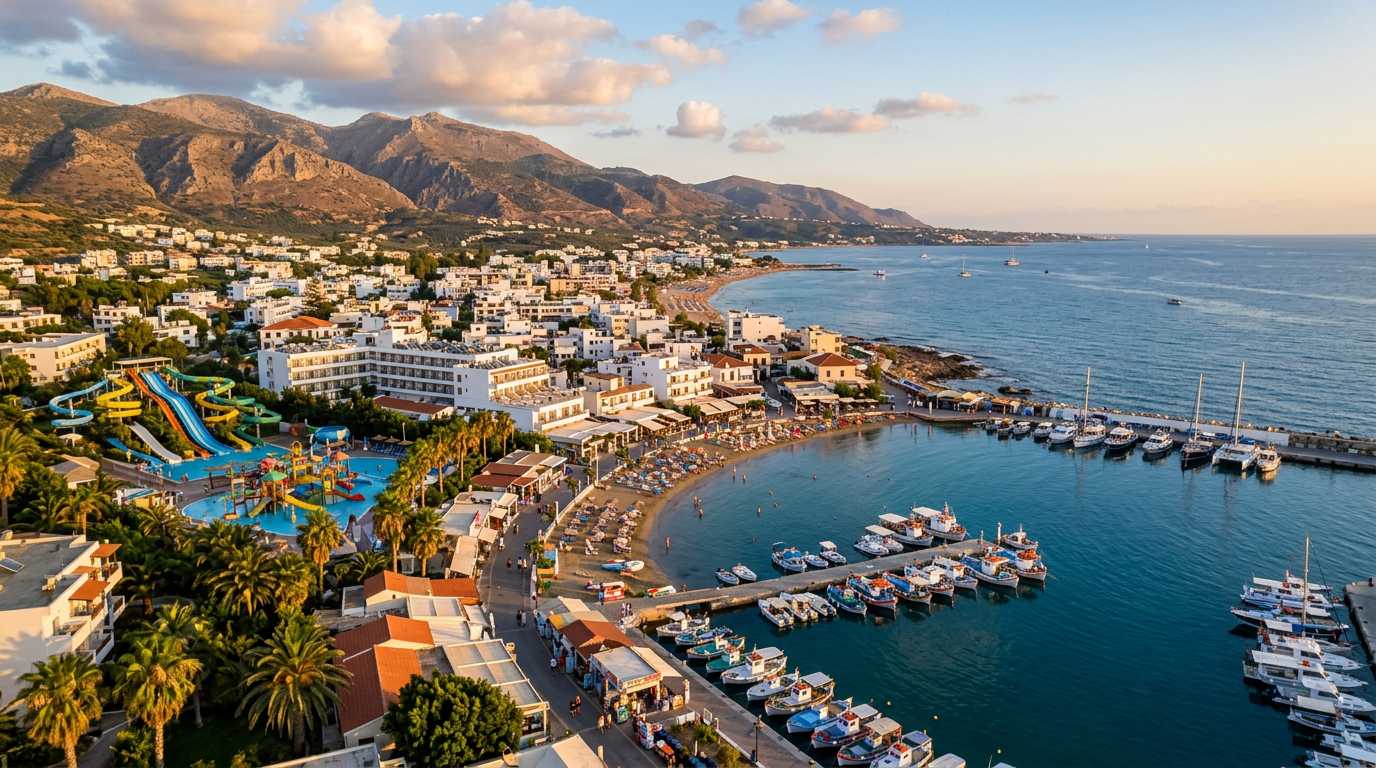
The coastal resort area of Hersonissos, located 26 kilometers east of Heraklion along the north coast highway, offers organized beaches, water sports, nightlife, and family attractions. While heavily developed for tourism, the area provides convenient beach access and serves as a base for exploring eastern Crete destinations.
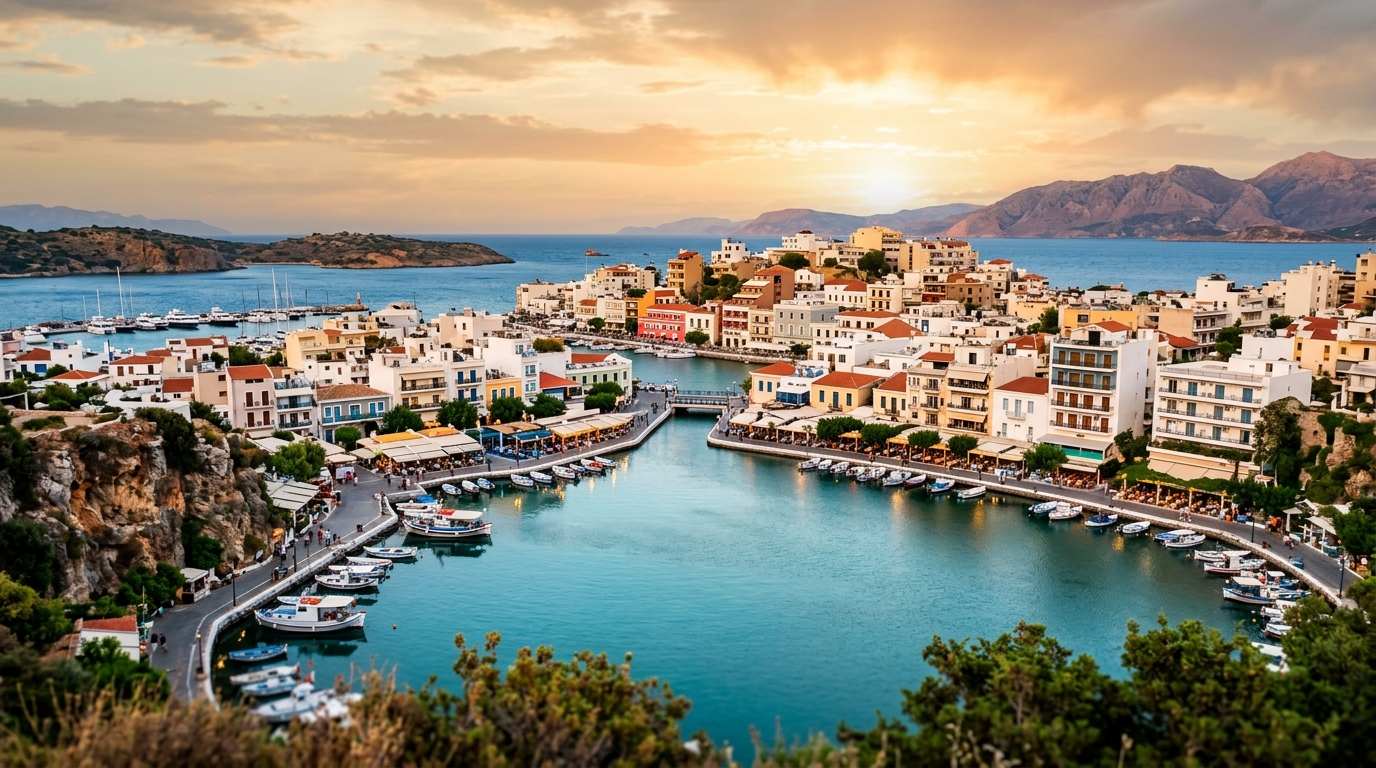
Continuing eastward, the charming town of Agios Nikolaos (65 kilometers from Heraklion) features a picturesque harbor, the bottomless Lake Voulismeni, and access to the upscale resort area of Elounda and the historic island of Spinalonga. The drive along the coastal highway takes approximately 1 hour, with numerous beach access points along the route.
Lasithi Plateau and Mountain Villages
The high-altitude Lasithi Plateau, situated at 900 meters elevation in the Dikti Mountains approximately 70 kilometers south of Heraklion, presents a completely different Cretan landscape. This fertile agricultural plain, once famous for thousands of white-sailed windmills (now mostly replaced by modern irrigation), produces potatoes, apples, and other crops thriving in the cooler mountain climate.
The drive to Lasithi via winding mountain roads takes approximately 1.5 hours, passing through traditional stone villages and offering spectacular views. The plateau's main attractions include the Dikteon Cave (legendary birthplace of Zeus), the traditional village of Tzermiado, and opportunities to observe authentic agricultural Cretan life. This excursion absolutely requires a rental car, as public transportation is minimal and inflexible.
Frequently Asked Questions About Car Rental in Heraklion
What documents do I need to rent a car in Heraklion?
To rent a car in Heraklion, you must present a valid driver's license held for at least one year (some providers require two years). EU citizens can use their national license, while visitors from outside the EU need an International Driving Permit (IDP) in addition to their national license. You'll also need a valid credit card in the main driver's name for the security deposit, and your passport or national ID card for identification. Minimum age requirements typically start at 21 years, though drivers under 25 may face surcharges or restrictions on vehicle categories.
Should I rent a car at Heraklion Airport or in the city center?
Renting at Heraklion Airport offers maximum convenience if you plan to travel beyond the city immediately upon arrival. You'll avoid taxi costs to your accommodation and can begin exploring Crete right away. Airport locations operate extended hours and provide 24/7 availability during peak season. However, airport rentals include facility fees (typically €20-40) and may have less competitive rates. City center locations work better if you're spending your first days exploring Heraklion on foot, as parking in the city center is challenging and unnecessary for urban sightseeing. Consider your specific itinerary when deciding.
What type of car should I rent for driving in Crete?
For travelers sticking to main highways and major archaeological sites with paved access, a compact or economy car provides adequate transportation at the best value. If your itinerary includes mountain villages, remote beaches with unpaved access roads, or the southern coast, consider upgrading to an SUV or small 4x4 vehicle like a Suzuki Jimny. These vehicles offer better ground clearance for rough roads, more powerful engines for steep mountain grades, and enhanced stability on winding routes. Families or groups of 4+ people should prioritize medium-sized cars for luggage capacity and passenger comfort during longer drives.
Is it safe to drive in Heraklion and Crete?
Driving in Crete is generally safe for attentive drivers who exercise caution and adapt to local conditions. Main highways are well-maintained and clearly marked. However, challenges include narrow mountain roads with hairpin turns, aggressive local driving styles, limited signage in rural areas, and occasional livestock on country roads. Drive defensively, maintain safe speeds especially on unfamiliar mountain routes, and avoid driving at night on secondary roads. The biggest risks typically come from driver inexperience with local conditions rather than inherent road dangers. Take your time, use GPS navigation, and remember that Cretan locals have spent their lives driving these roads—let them pass if they're in a hurry.
How much does car rental cost in Heraklion?
Car rental prices in Heraklion vary dramatically by season and vehicle type. During peak summer months (July-August), economy cars typically cost €40-70 per day, while SUVs range from €70-120 daily. Shoulder season rates (May-June, September-October) drop to approximately €25-45 for economy cars and €45-80 for SUVs. Winter rates can be as low as €15-25 daily for small cars. Weekly rentals provide substantial per-day savings, often reducing costs by 30-40%. Full insurance coverage adds €15-30 per day. Total costs including insurance for a week typically range from €250-450 in shoulder season to €500-800+ during peak summer. Book early for best rates and availability.
Do I need insurance when renting a car in Heraklion?
Basic third-party liability insurance is mandatory and included in rental rates, covering damage you cause to other vehicles or property. However, this doesn't protect you financially from damage to your rental vehicle. Collision Damage Waiver (CDW) reduces your liability but typically leaves a deductible of €800-1500 for which you remain responsible. Super CDW or Full Coverage eliminates the deductible, providing complete protection at additional cost. Before purchasing expensive provider insurance, verify whether your personal auto insurance, credit card benefits, or travel insurance includes rental car coverage in Greece. Many policies offer adequate protection, potentially saving €100-200+ per week in unnecessary insurance charges.
Can I drive to other Greek islands from Heraklion?
You cannot drive directly to other Greek islands from Crete, as it is separated by sea from other destinations. However, you can take your rental car on ferries to nearby islands like Santorini or back to mainland Greece via Piraeus. Most rental agreements prohibit taking vehicles on ferries without explicit permission, and providers that allow it charge substantial fees (typically €100-200+) plus require advance notification. One-way rentals (picking up in Heraklion, dropping off in Athens after a ferry journey) are sometimes available but expensive. For island-hopping itineraries, it's usually more cost-effective to rent separately on each island rather than paying ferry transport fees.
What happens if I return my rental car late in Heraklion?
Rental agreements specify exact return times, and late returns incur additional charges. Most providers offer a grace period of 30-60 minutes for minor delays due to traffic or fueling. Returns beyond this window but within the same day typically cost an additional hourly rate. Returns extending into the next calendar day usually result in charges for a full extra day at the daily rate, which can be expensive (€50-100+). If you anticipate being late, contact the rental provider immediately to discuss options—they may be able to accommodate a short extension at a reduced rate if no other customer is waiting for your vehicle. Flight delays and emergencies are usually handled with flexibility if you communicate proactively.
Are there toll roads in Crete?
Crete has no toll roads, so you won't encounter any toll charges during your driving. This makes trip budgeting simpler, as fuel is your only ongoing driving expense beyond the rental cost. However, if you take your rental car on a ferry to mainland Greece, the major highways (especially the Athens-Thessaloniki route) do have tolls. These range from €2-15 depending on distance, and some toll booths accept only cash while others take credit cards. For driving exclusively in Crete, tolls are not a consideration.
How far in advance should I book my Heraklion rental car?
For peak summer travel (July-August), book at least 2-4 months in advance to secure reasonable rates and your preferred vehicle category. Heraklion experiences extremely high demand during this period, and waiting until the last minute often results in extremely high prices or complete unavailability. Shoulder season travel (May-June, September-October) allows more flexibility, though 2-6 weeks advance booking is still recommended for best selection and pricing. Winter and early spring travelers can often book just 1-2 weeks ahead. Early booking typically unlocks discounted rates, and most providers offer free cancellation up to 24-48 hours before pickup, allowing you to secure good rates without commitment if plans might change.